Mindfulness & Meditation — Post 10
Sitting, standing, and recumbent postures that support mindful meditation and smooth chi flow.
The first eight posts in this tai chi qigong mindful meditation series introduced the essentials. They explained how the practice works, how breath and chi interact, and how movement and stillness shape awareness.
Here, this post turns toward the physical base of practice. Sitting, standing, and recumbent postures each support smooth chi flow. They give meditation a stable, comfortable structure you can return to again and again.
Why Posture Matters in Mindful Meditation
Posture is the base that allows mindful attention to settle. When the body is supported, the breath moves without strain and chi circulates more freely. Good alignment reduces effort, lowers tension, and signals safety.
At its core, in tai chi qigong, posture isn’t about holding a rigid shape. It’s about finding a natural, sustainable position that lets awareness stay steady. In many cases, small adjustments in the feet, pelvis, spine, and shoulders can make meditation more comfortable.
This is especially true for anyone managing pain, fatigue, or limited mobility. The aim is simple: a posture that supports the practice rather than competing with it.
Seated Posture (Seated Meditation) For Steady Ease
Sitting provides a steady base with less demand on the legs. It becomes ideal for longer meditation or for days when standing isn’t comfortable.
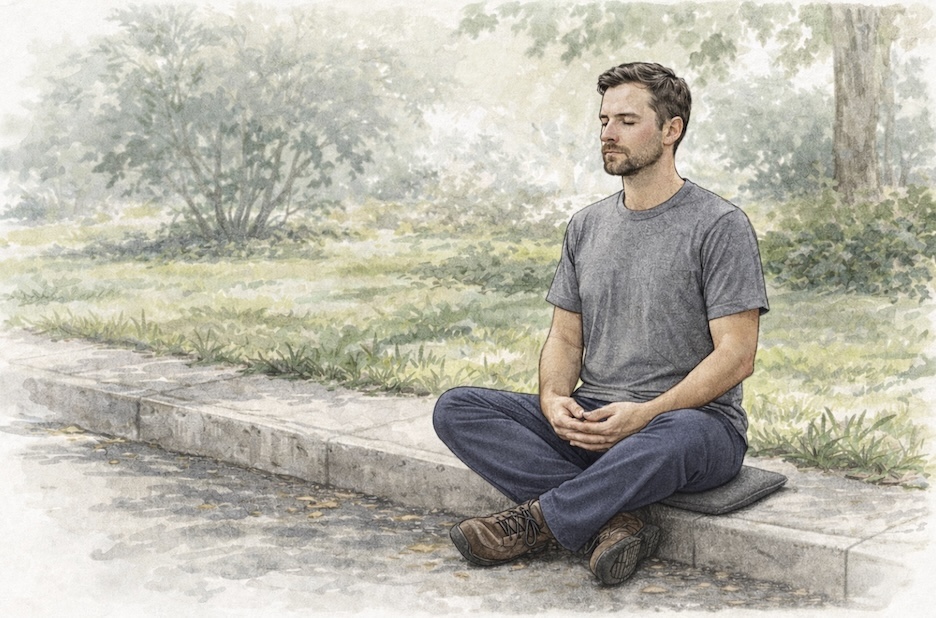
To begin, sit on a chair or cushion at a height that reduces strain. Keep your feet grounded if you’re in a chair, or let the legs relax naturally if you’re on a cushion. Tilt the pelvis slightly forward so the spine can lengthen without effort. Rest your hands on your thighs or lightly over the lower dantian. Keep the shoulders soft, the jaw relaxed, and the gaze easy.
From here, as the posture settles, feel the spine lengthen and the breath widen the ribs without lifting the shoulders. Notice how chi rises quietly with each exhale and how tension softens as the body becomes still.
Additionally, sitting supports smooth chi flow through the torso and helps the mind remain steady without the micro‑adjustments required in standing. For many people, it becomes the most sustainable posture for consistent practice.
Standing Posture for Grounded Alertness
For many practitioners, standing is a powerful posture for tai chi qigong, but it is not always the easiest place to begin. It requires the body to stay upright, relaxed, and open all at once. For many people — especially anyone managing pain, fatigue, or leg weakness — sitting or recumbent practice may be more accessible. This is often true at the beginning.
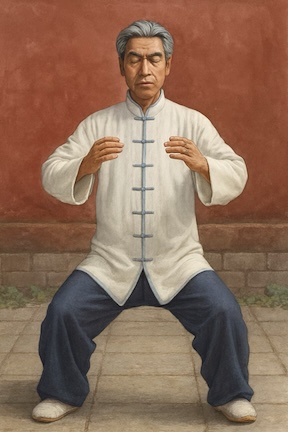
First, stand with your feet parallel and shoulder‑width apart, letting your weight settle evenly. Keep the knees soft—not locked, not deeply bent. Let the pelvis hang so the lower back stays open rather than gripped.
Next, allow the spine to lengthen upward as if gently suspended, while the chest softens and the shoulders release. Your hands can rest at your sides or in front of the lower dantian. They can also rest in a relaxed “embracing the tree” shape.
Settling Into the Posture
At this point, as you settle, notice the feeling of “rooting” through the feet while the breath drops naturally into the lower dantian. The legs and postural muscles will make small, continuous adjustments to maintain balance. If you notice tension building in the thighs or lower back, soften the knees slightly. Release the buttocks and let the weight sink more evenly through the feet.
Over time, with more familiar practice, the posture can gradually deepen. Lowering the body in small, comfortable increments—never forcing, never collapsing — strengthens the legs. It also refines alignment and develops a deeper sense of rooting. Over time, this gentle progression helps the body relax more fully into the stance. It allows chi to rise through the torso without the strain that beginners often experience.
In general, standing offers clear structure and a strong sense of grounding, but it can be demanding. For this reason, shorter periods of standing, alternated with sitting or recumbent practice, often work best. As alignment and relaxation improve together, standing becomes a stable, quietly alert posture. It supports smooth Chi flow without excessive effort.
Recumbent Posture (Supine Meditation) for Restorative Practice
In these moments, the recumbent posture is a supportive option when pain, fatigue, or illness makes upright positions difficult. It allows the body to rest while keeping the mind engaged.
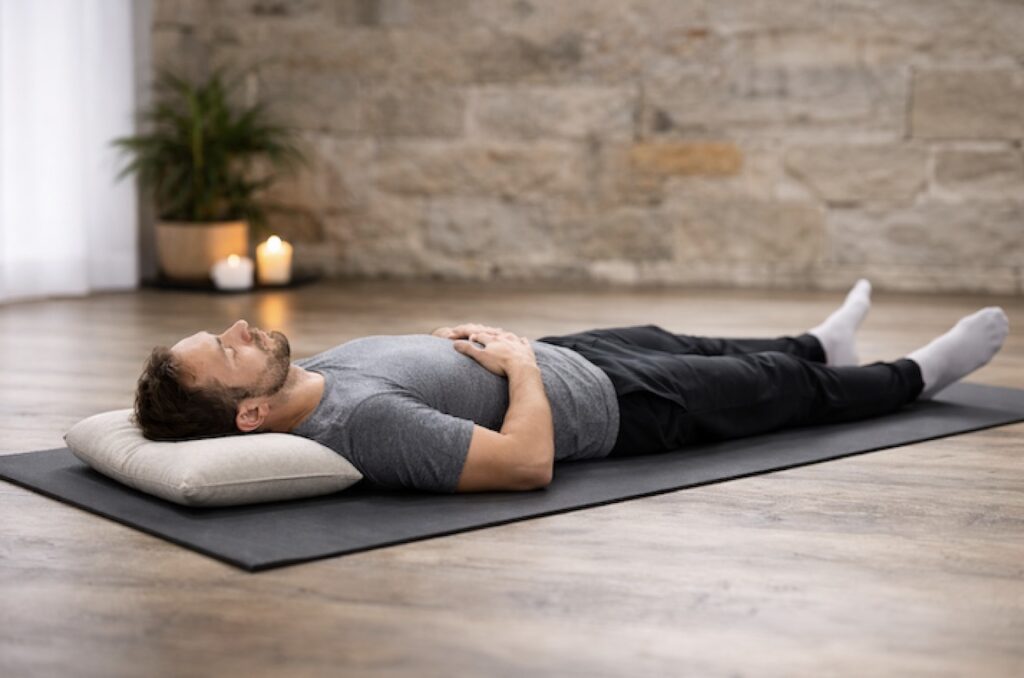
To begin, lie on your back or rest on your side, with your head supported at a height that feels comfortable. Keep the knees bent or straight — whichever reduces strain. Let the arms rest at the sides or over the lower dantian. Release the shoulders so the chest can soften, and support the lower back if needed. Keep the neck neutral and the jaw relaxed.
From here, as the body settles, feel the weight sinking into support. Follow the breath as it spreads through the torso. Notice chi movement unfolding naturally without directing it.
Moreover, recumbent practice removes the physical demands of upright alignment. It reduces muscular tension and supports smooth Chi flow. It also keeps meditation accessible during pain flares, recovery periods, or times of low energy.
From Posture to Presence
This post introduced three practical postures — sitting, standing, and recumbent. It explained how each one supports smooth chi flow and provides a stable base for mindful meditation. The emphasis is on choosing the posture that fits the body’s needs so the practice stays comfortable and sustainable.
Posture is one of the simplest ways to keep tai chi qigong meditation accessible. IIt adapts to real‑life conditions — energy levels, mobility, pain, or the demands of the day. This keeps meditation something you can return to consistently. Readers can follow along as this series continues.
The next post explores accessibility. It looks at how tai chi qigong can be practiced indoors or outdoors, in small or wide‑open spaces, at any time of day, and by people of all ages.
But why just read about it? When was the last time you felt everything in you — body, breath, and awareness — moving in the same direction?
My e‑courses guide you toward that integration. They help you release stress. Once you become familiar with the movements, you can gradually feel the quiet rise of chi. Equally important, these simple tai chi qigong movements guide you back to a sense of balance that supports you from the inside out.
When you’re ready to experience that shift, I’ll walk you through it step by step. We’ll move one breath, one movement at a time.

You might be interested in:
- Mindfulness & Meditation — Post 1 Mindfulness & Chi Through Tai Chi Qigong Meditation
- Mindfulness & Meditation — Post 2 Physical Benefits of Tai Chi Qigong Mindful Meditation
- Mindfulness & Meditation — Post 3 Mental and Emotional Benefits of Tai Chi Qigong Meditation
- Mindfulness & Meditation — Post 4 Cognitive Benefits of Tai Chi Qigong Mindful Meditation
- Mindfulness & Meditation — Post 5 Benefits of Energy Regulation and Breath in Tai Chi Qigong
- Mindfulness & Meditation — Post 6 Spiritual Growth Through Tai Chi Qigong Meditation
- Mindfulness & Meditation — Post 7 How Internal Listening Builds Sensory Awareness
- Mindfulness & Meditation — Post 8 Everyday Mindful Movement with Tai Chi Qigong
- Mindfulness & Meditation — Post 9 Moving vs. Quiescent Meditation in Tai Chi Qigong
- Mindfulness & Meditation — Post 11 Tai Chi Qigong Mindful Meditation for Every Body
- Mindfulness & Meditation — Post 12 Tai Chi Qigong Tools for Mindful Meditation
- Mindfulness & Meditation — Post 13 Yi, Wuwei, & Wuji in Tai Chi Qigong Mindful Meditation