Mindfulness & Meditation — Post 1
Explore the difference between meditation and mindfulness — and how tai chi qigong unites both for vitality and peace.
In today’s fast-paced world, finding moments of peace and clarity has become more important than ever. Perhaps you’ve heard a lot about mindfulness, or maybe you’re exploring the ancient practices of tai chi qigong.
Often, these terms get used interchangeably, leading to some confusion. But have you ever wondered about the subtle yet profound differences between practicing mindfulness and engaging in tai chi qigong meditation? These differences reveal two distinct but complementary paths.
While both paths lead to greater well-being, they offer distinct approaches. This blog post aims to clarify these differences. It also helps you understand the unique and powerful journey that tai chi qigong meditation offers.
Additionally, this is the first in a series of blogs. Next, following this foundational understanding, I will introduce you to the transformative benefits of tai chi qigong meditation. This practice inherently cultivates profound mindfulness.
What is Mindfulness? The Foundation of Presence
At its heart, mindfulness is present‑moment awareness, cultivated through non‑judgmental observation. It means bringing full attention to what is happening right now. You observe thoughts, feelings, sensations, or the sounds and sights around you. You simply notice them without attachment or reaction.
Similarly, mindfulness can be practiced informally — savoring a meal, listening deeply to a friend — or formally through seated meditation. In meditation, the breath serves as an anchor, gently guiding attention back whenever the mind wanders. In essence, mindfulness is observing the river of experience without jumping in or trying to control its flow.
What is Tai Chi Qigong Meditation? The Active, Embodied Journey
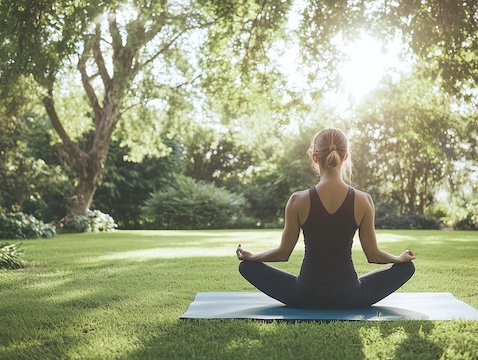
Tai chi qigong meditation is not about sitting still. It’s a dynamic practice that integrates slow, flowing movement, synchronized breath, and focused intention.
At its heart, tai chi qigongmeditation cultivates and guides chi — the lifeforce energy that animates all living things. Through specific forms, you actively shape your internal landscape, clear blockages, and promote harmonious flow.
This practice goes beyond passive observation, uniting mind, body, and spirit through gentle yet powerful movement.
Within the realm of tai chi qigong, we often speak of two primary types of meditation. The first is donggong, or moving meditation. The second is jinggong, or quiescent meditation, which involves meditating in stillness.
Indeed, tai chi chuan itself is a profound form of donggong. Its flowing sequences create a path to inner calm and chi cultivation.
For many people, donggong feels easier because their bodies carry restless energy. Movement helps them release that restlessness.
However, for those who can embrace it, jinggong — or stillness meditation — often yields deep clarity. It unites mind, body, and spirit through gentle yet powerful stillness.
In this practice, we directly address what the Chinese call 心猿意馬 (xīnyuán yì mǎ) — the ‘mind monkey, intention horse.’ This phrase describes the racing thoughts that constantly demand our attention. Through stillness, we finally quiet them.
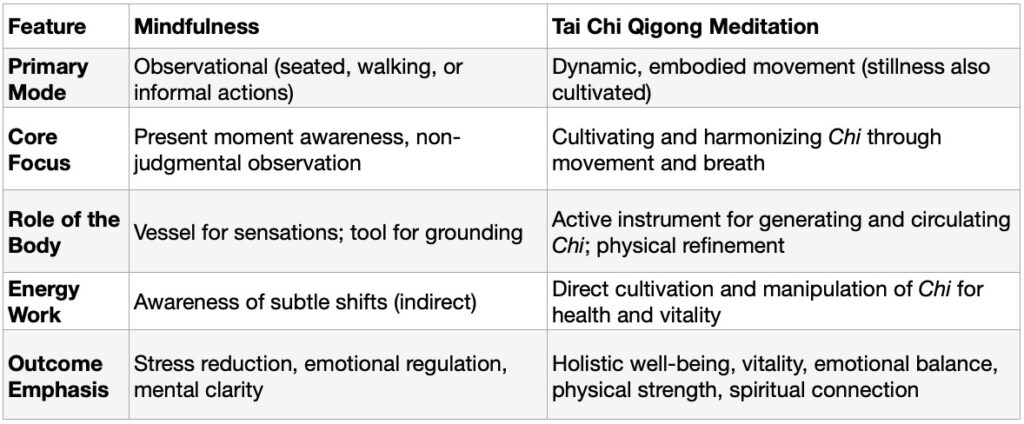
Key Distinctions: A Side-by-Side Comparison
Ultimately, while both paths are incredibly beneficial, understanding their core differences can offer clarity. This insight helps you recognize which practice resonates more deeply with your personal journey.
The Powerful Synergy: How Tai Chi Qigong Meditation Embodies and Deepens Mindfulness
As a result, tai chi qigong meditation is inherently mindful. Its slow, precise movements demand present‑moment awareness of posture, breath rhythm, and the flow of chi. Through this practice, you connect deeply with your body in a way that naturally cultivates mindfulness.
But tai chi qigong takes mindfulness further. Beyond observation, it actively trains attention and focus through structured forms. It offers a tangible pathway to deepen awareness into the fabric of your being through chi cultivation. Here, you don’t just notice experience — you learn to shape it for greater health, vitality, and inner peace.
Why Choose Tai Chi Qigong Meditation?
If you’re seeking a path that integrates physical movement with profound inner work, tai chi qigong meditation offers a unique and powerful system. It supports both your body and your inner life. It’s for those who:
- Prefer an active and embodied spiritual practice.
- Want to directly influence their physical vitality and energy levels through the conscious cultivation of chi.
- Seek a holistic approach that nurtures mind, body, and spirit together
All in all, tai chi qigong meditation is not just about observing experience. It is about actively shaping that experience for greater health, vitality, and inner peace.
Experience the Transformation for Yourself
Together, mindfulness and tai chi qigong meditation both nurture awareness, clarity, and peace. While they share common ground, tai chi qigong meditation adds the dimension of movement and chi cultivation. This gives you a tangible way to embody mindfulness.
Finally, this post is the first in a series. Together, we will explore how practices like donggong (moving meditation) and jinggong (stillness meditation) transform health, vitality, and inner balance. These practices guide you toward a more resilient and harmonious life.
Now, are you ready to experience “meditation in motion”? Explore my tai chi qigong sessions and resources designed to help you cultivate chi. These practices quiet the mental ‘running horses’ and build lasting strength, growth, and harmony. You progress one breath and one step at a time.
Be well.

You might be interested in:
- Mindfulness & Meditation — Post 2 Physical Benefits of Tai Chi Qigong Mindful Meditation
- Mindfulness & Meditation — Post 3 Mental and Emotional Benefits of Tai Chi Qigong Meditation
- Mindfulness & Meditation — Post 4 Cognitive Benefits of Tai Chi Qigong Mindful Meditation
- Mindfulness & Meditation — Post 5 Benefits of Energy Regulation and Breath in Tai Chi Qigong
- Mindfulness & Meditation — Post 6 Spiritual Growth Through Tai Chi Qigong Meditation
- Mindfulness & Meditation — Post 7 How Internal Listening Builds Sensory Awareness
- Mindfulness & Meditation — Post 8 Everyday Mindful Movement with Tai Chi Qigong
- Mindfulness & Meditation — Post 9 Moving vs. Quiescent Meditation in Tai Chi Qigong
- Mindfulness & Meditation — Post 10 Tai Chi Qigong Postures for Mindful Meditation
- Mindfulness & Meditation — Post 11 Tai Chi Qigong Mindful Meditation for Every Body
- Mindfulness & Meditation — Post 12 Tai Chi Qigong Tools for Mindful Meditation
- Mindfulness & Meditation — Post 13 Yi, Wuwei, & Wuji in Tai Chi Qigong Mindful Meditation